




Summary
Methods of processing overwhelming relational experiences from your past
Links
Lesson notes
To heal trauma:
- Connect with body awareness
- Create a felt-sense of safety using practices that support it
- Acknowledge what you’re ready to heal, get clear on your intention
- Evoke the buried emotion, sensation, story, or memory
- Writing about the part, emotion, or memory you want to process
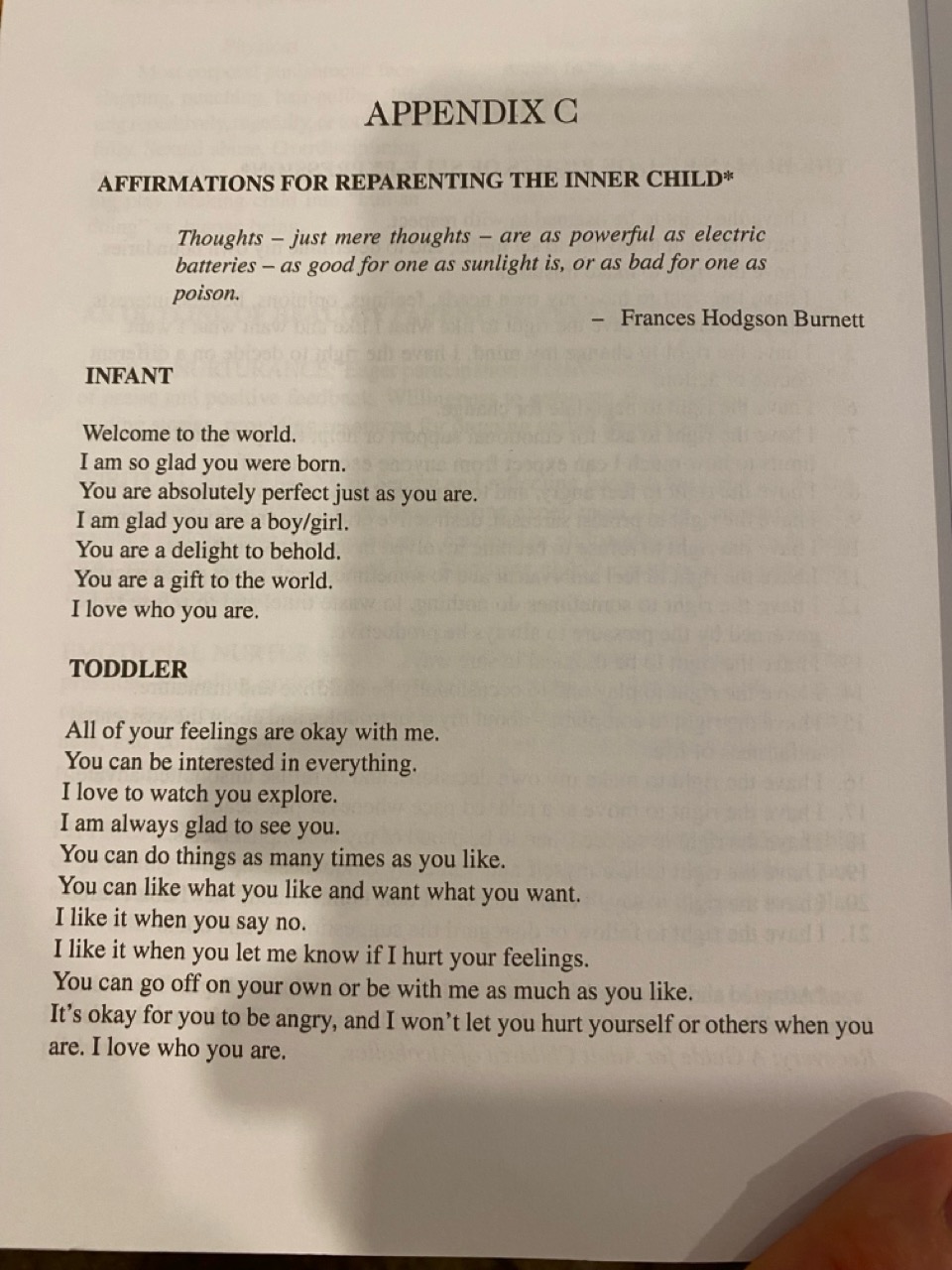
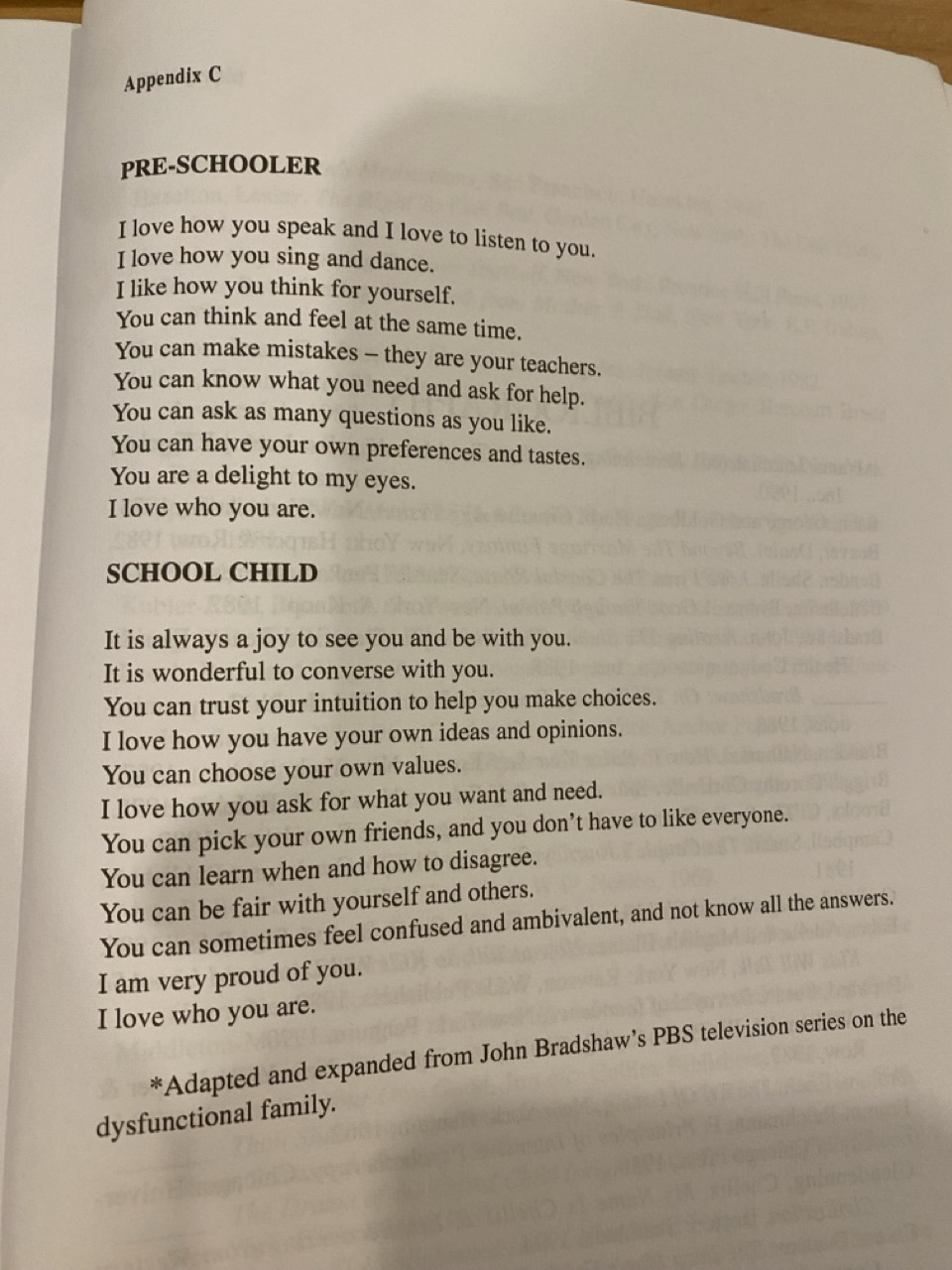
- Visualize your inner child, talk to him
- Say out loud: “I’m ready to feel my pain, I’m ready to face my discomfort”
- Remember a moment when you were recently reactive
- Conscious connected breathing - see the guided practice below
- Notice the emotion and sensations that you begin to feel, keep creating safety and sit with it
- Hold your younger parts, your wounds, in the ways they needed. Create the repair of interpersonal relationship and co-regulation that those parts of you need. Remember, another regulated, somatic-informed person is your best bet for this, but you can do some on your own.
- Do your best not to judge your experience. Affirm what you’re experiencing, acknowledge all that arises without trying to get rid of it or change it. Give all parts of yourself unconditional love. Use your inner mother and inner father to give different types of nurture to your inner child / younger parts.
- Let your face and body express as needed. Move, hold yourself, make sounds, express, and follow your intuition to help your body support completion of your emotions and physiological responses that may arise. Don’t hold back what wants to be let out, especially outbursts of tears and emotion.
- Afterwards, to help you integrate the experience, rest. Get cozy. Slow down. Spend time journalling about what happened, especially what you felt. Sleep if you need to. Don’t go right back into being busy and working. Your body may feel raw and exhausted and pushing it may lead to dysregulation.
Remember: you can also apply all of this in your day to day life, including when you get triggered, overwhelmed, or notice younger parts of you coming online. This is a life-long practice of learning to notice our needs, to stay in our bodies, and take care of ourselves and meet our needs, and process our emotions, rather than avoiding, dissociating, or letting protector parts run the show.
Reflection questions:
- Is there a clear childhood relationship or memory I want to heal?
- What do I believe I needed more of as a child that I didn’t get? How can I give that to my inner child now, either through imagining an experience, or creating one in real life?
- As I listened to Jack share about the different trauma healing modalities, what did I notice? Did any of them stand out? Did hearing him speak to the inner child in small ways feel supportive? How can I make this my own and tailor it to what I believe my own protector parts, exiled parts, and inner child may need?
Guided practices:
Conscious Connected Breathwork (Technique + Guided Session): https://www.youtube.com/watch?v=4Z3S4R-ygzM
Conscious Connected Breathwork for inner child healing: https://youtu.be/RO0Im1aBX6U
Accessing and healing your inner infant: https://www.youtube.com/watch?v=YXWwb9wuoYc
Anger release: https://www.youtube.com/watch?v=pGhLJu2dbes
Guided tapping for emotional processing: https://www.youtube.com/watch?v=3nHiqYFdhtw
Reparenting your inner child: https://share.descript.com/view/iyeQ8WXmsYZ
Processing triggers: https://share.descript.com/view/dWwVoJe4IMI
Instructions for speaking to your inner child by Pete walker
Further resources:
Complex PTSD by Pete Walker - my favorite book on healing childhood trauma: https://www.amazon.com/Complex-PTSD-Surviving-RECOVERING-CHILDHOOD/dp/1492871842
The Tao Of Fully Feeling by Pete Walker: https://www.amazon.com/Tao-Fully-Feeling-Harvesting-Forgiveness-ebook/dp/B017I3NRRO