




Summary
Understanding sub-personalities that try to take the wheel in order to protect us
Links
Lesson notes
Internal family systems (IFS) views a person not as a unified whole self but as a series of parts. We can think of parts as sub-personalities.
Each part has its own:
- Fears
- Triggers
- Strategies
There are 3 types of parts:
- Exiles: parts of us that experienced overwhelming. Situations, traumatic moments, and they became exiled. These are the parts of us that hold our trauma.
- Managers: Protector parts that try to protect us from feeling pain via proactive strategies or ones that seek to prevent discomfort and pain
- Firefighters: Protector parts that come online in response to discomfort (often, when we get triggered and go into sympathetic or dorsal vagal)
Self: This is the core essence of who we really are in our authenticity, when we are not trying to protect ourselves, when we're being real, when we're not putting on a mask or trying to run away or avoid pain. The 8 core C’s of self:
- Calm
- Curious
- Compassionate
- Clear
- Confident
- Courageous
- Creative
- Connected
Trauma can separate us from Self, from who we truly are.
In IFS, the goal is “restoring leadership of the self”. We are teaching our parts that it’s safe for them to stop taking over, and letting Self be in charge.
With trauma work, we are renegotiating with parts to help them feel safe again. To meet the exiles, work to process their pain, and heal the trauma they hold.
Blending: When protector parts come online and take over from “self”, often without us even realizing what’s happening. This can change as we become more regulated and more self-aware.
In moments when protector parts come online, we can become more left-brain dominant and tend towards being controlling, overly-analytical, overthinking / rumination, and becoming controlling or manipulative.
Common triggers:
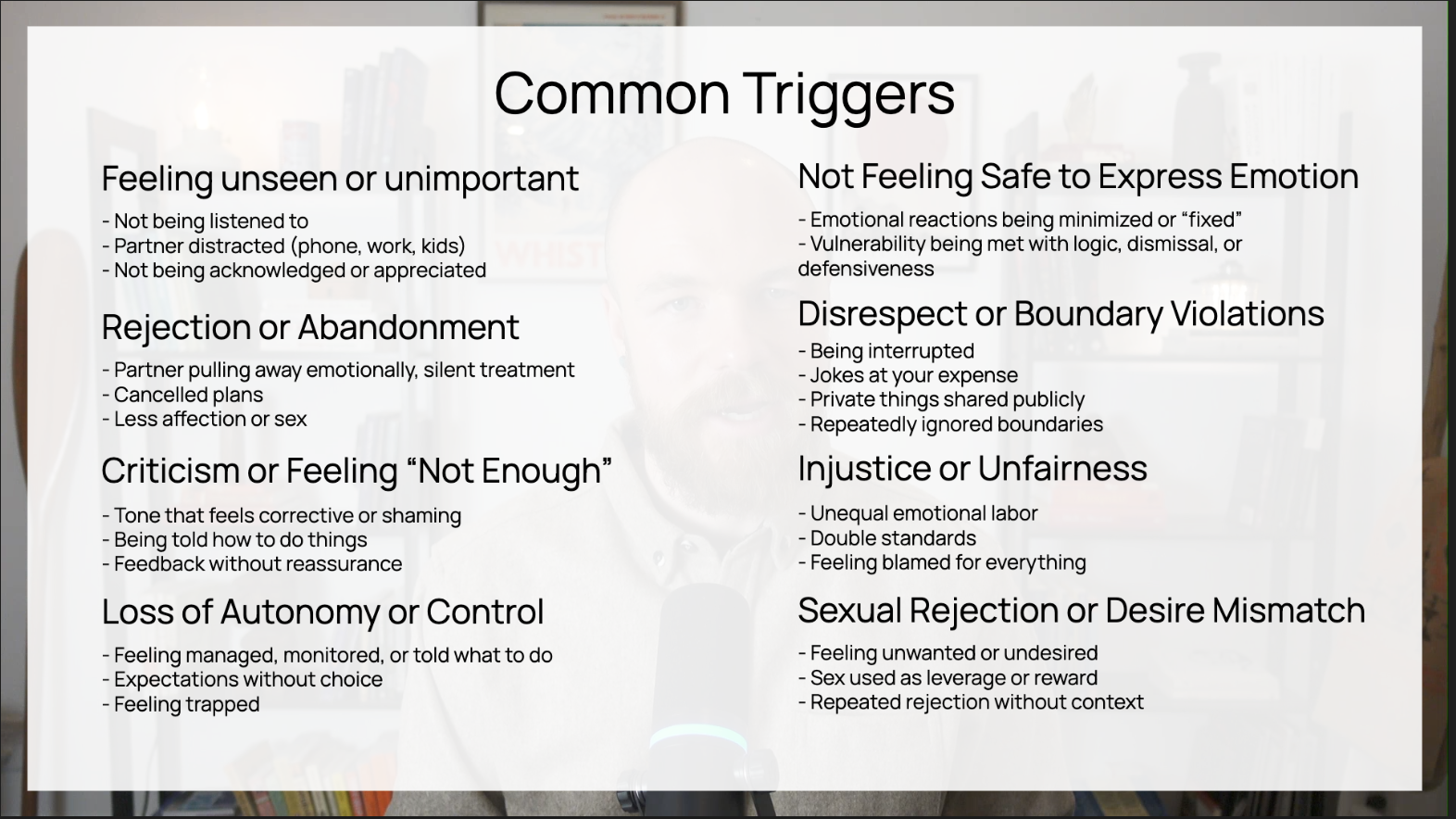
Common protectors:

Discussion questions
- What are some exiled parts that I might have within me that hold uncomfortable thoughts or memories?
- What managers do I notice in myself? What strategies do they use and when do they tend to use them? (refer to the image above)
- What firefighters do I notice in myself? What strategies do they use, and when?
- What causes me to get triggered most often? Reference the list of common triggers above.
- What stories do my protector parts try to tell me when I get triggered? Are these stories really true?
- What does it feel like in my body when I get triggered, or when my protectors come online?
- What might my managers and firefighters be trying to protect me from?
Homework:
- Sit with yourself. Close your eyes, take some deep breaths, and reflect on a recent time a protector came online. What was happening? Where were you? Who else was there? What did they say? What did you say? As you remember the full details of the experience, notice what happens in your body? Do emotions or sensations arise? Allow them. Breathe deeply, and use your grounding tools to help you face any discomfort that may arise.
- Find an appropriate time to have a conversation with your partner about your protectors. Share the ones you think you have, and ask her if she agrees, or would add any more. Remember, this might be triggering for both of you, so observe your body sensations, and use grounding tools as often as you need to.
Further resources:
- No Bad Parts - A book by Richard Schwartz, creator of IFS on Healing Trauma and Restoring Wholeness: https://www.amazon.com/No-Bad-Parts-Restoring-Wholeness/dp/1683646681
- King, Warrior, Magician, Lover: Rediscovering the Archetypes of the Mature Masculine - A book that clearly highlights the archetypes of Boy psychology and their mature masculine potentials: https://www.amazon.com/King-Warrior-Magician-Lover-Rediscovering/dp/0062506064